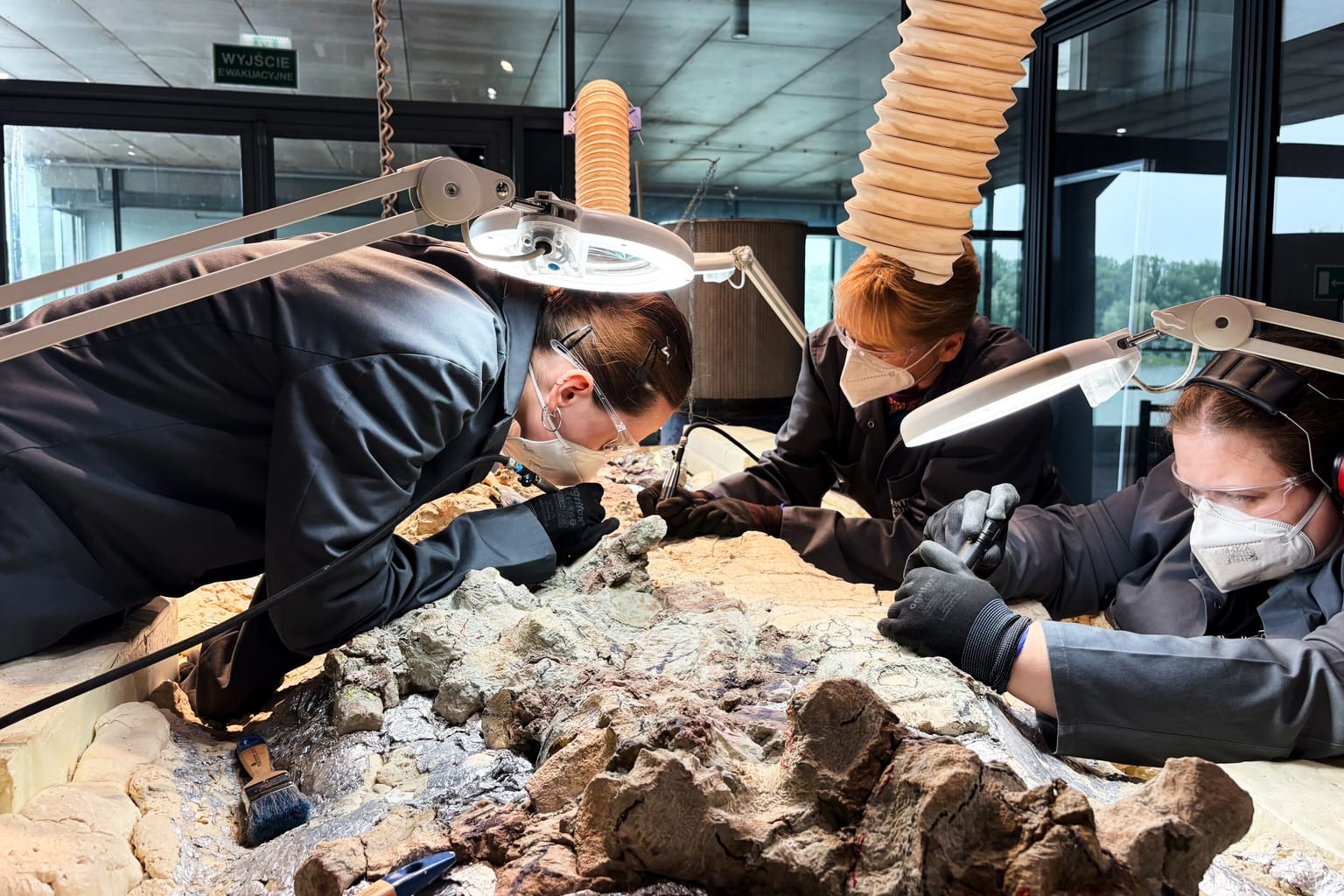
2,000 volunteers join a painstaking effort to restore massive skeleton of prehistoric predator
Volunteers armed with chisels, brushes and protective goggles chip away at rock encasing the bones of a massive prehistoric amphibian in a glass-walled laboratory on the ground floor of Warsaw's Copernicus Science Centre.
What to take away
Watch whether the local support keeps growing after the first win.
Why it's good
It shows people coming together to solve a real local problem.
Keep reading
More Bright Stories
Human KindnessGenome tool places large genetic sequences precisely in rice and tobacco without DNA breaks
Researchers at King Abdullah University of Science and Technology (KAUST) have developed a new way to add large pieces of genetic information to plants, overcoming a challenge that has limited plant biotechnology for decades. The advance could help scientists build more complex traits into plants in the future, supporting research into areas such as crop resilience, sustainable agriculture, biotechnology and the use of plants as scalable platforms for producing therapeutics and biologics.
Phys.org Biology - Jul 22
Human KindnessHydra rebuilds the body by restoring its internal cellular map
Before a hydra can regrow a head or foot, its cells appear to rebuild the internal map that tells them where they are and what they should become next, FMI researchers report. The work suggests that cells need to interpret not only where they are in the body, but also what stage of regeneration they are in—a finding that could help explain how tissues regenerate after injury.
Phys.org Biology - Jul 22
Human KindnessThe rise of community-led football
As Premier League prices rise, growing numbers of supporters are seeking out something closer, cheaper and more human in non-league football
Positive News - Jul 22
Human KindnessAI tool predicts how DNA sequences switch on genes across different cell types
Deep learning approaches have transformed how scientists predict the activity and function of DNA sequences in the genome. A new AI tool called Corgi (Context-aware Regulatory Genomics Inference), developed by Martin Vingron's bioinformatics group at the Max Planck Institute for Molecular Genetics allows researchers to predict how the genome behaves across different cell types. The findings could help improve efforts to mimic the activity of cells virtually, with potential applications in basic research and medicine.
Phys.org Biology - Jul 21