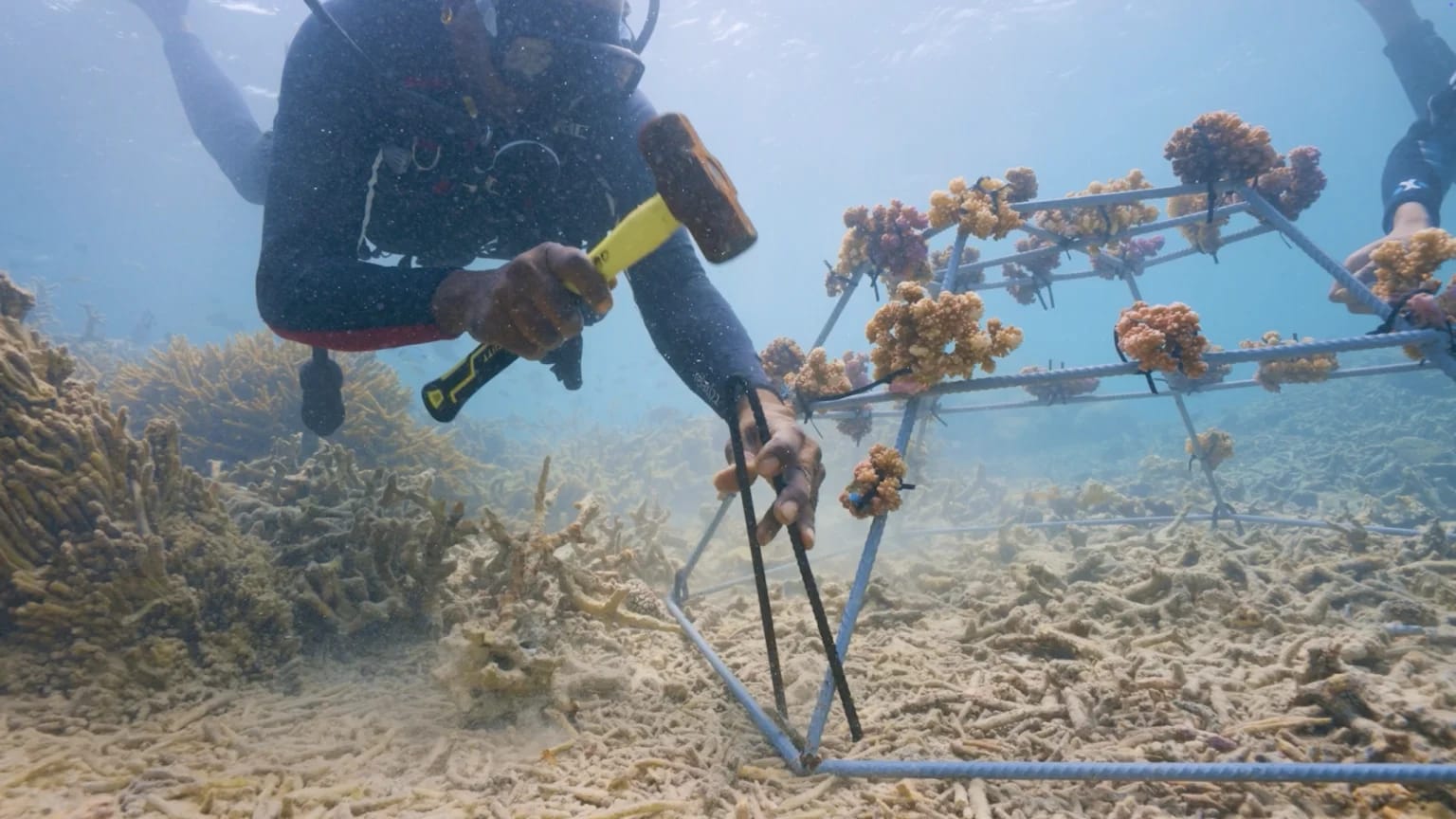
Coral Reef Restoration in Mauritius and Seychelles Puts Local People at the Heart of Ocean Recovery
Happy Eco News Coral Reef Restoration in Mauritius and Seychelles Puts Local People at the Heart of Ocean Recovery Coral reef restoration in Mauritius and Seychelles is combining community participation, heat-tolerant coral science, and regional knowledge sharing to rebuild...
What to take away
Watch whether the local support keeps growing after the first win.
Why it's good
It points to real recovery progress for a vulnerable species or place after sustained conservation work.
Keep reading
More Bright Stories
Good EarthOcean Protection Milestone Reached as 10% of the World’s Ocean is Designated as Conserved Area
Happy Eco News Ocean Protection Milestone Reached as 10% of the World’s Ocean is Designated as Conserved Area The world reached a major ocean protection milestone in April 2026 when more than 109 million square kilometers of ocean became officially protected, surpassing the 10% threshold for the first time.
Happy Eco News - Jul 27
Good EarthUnearthing Paris’ Mythical Second River
Only knee-deep in parts yet relatively wide, the Bièvre gently flows with transparent waters that shimmer in the afternoon sun. A shoal of fish lazily linger beside a large stone in one section. Further along, birds and butterflies weave between the long grasses lining the banks. From here, the waterway.
Reasons to be Cheerful - Jul 27
Good EarthOn Brink of Extinction, the Vaquita Porpoise is Being Preserved By Digital Image
The elusive vaquita porpoise swims in the wild only in shallow northern waters of Mexico’s Gulf of California (also known as the Sea of Cortez)—and it’s one of the rarest and most endangered marine mammals on Earth. With a wild population numbering as low as ten, the vaquita is perilously close to extinction—an outcome caused
Good News Network - Jul 26
Good EarthUnwritten social rules, not government oversight, help keep forest land sustainable
Swidden agriculture—often called "slash-and-burn"—has been practiced on every inhabited continent throughout human history, and for decades it has been blamed for the destruction of the world's rainforests. However, a new study of more than 18,000 forest patches around the world found that the environmental impact of swidden is more nuanced and less destructive than the term "slash-and-burn" suggests—and that unwritten social rules in small societies, not government oversight, often regulate land use closely enough to support both harvests and forest regeneration sustainably over time.
Phys.org Earth - Jul 25