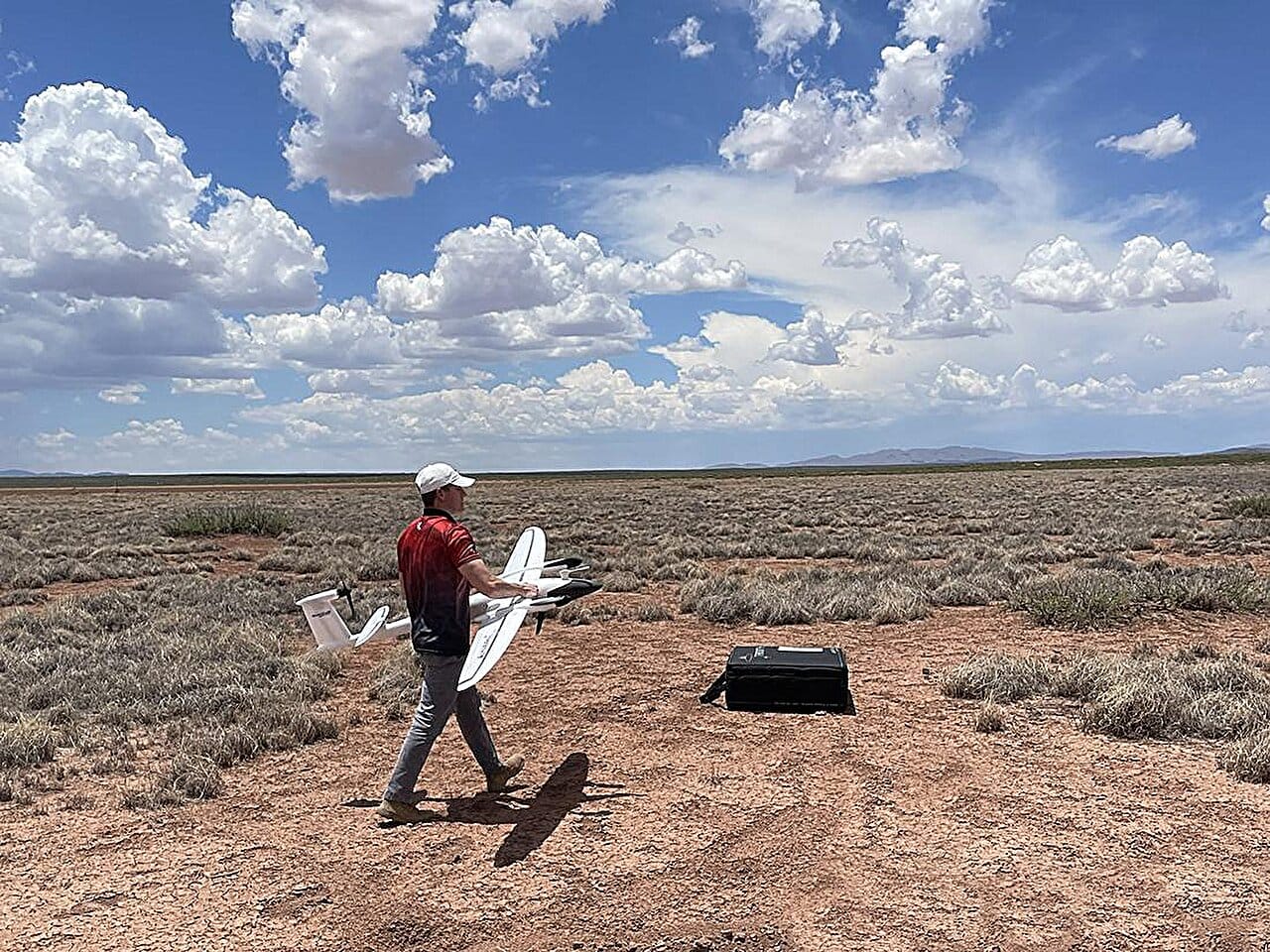
Drone cameras can measure pigments indicating surface health of dryland soils
Drylands soils are being degraded by human activities and climate change, threatening the thin living layers covering their surface, called biocrusts, according to the U.S. Geological Survey. Composed of cyanobacteria, lichens, mosses, algae, fungi and bacteria, biocrusts play...
What to take away
Watch whether this cleaner-energy idea becomes practical enough to spread.
Why it's good
It highlights progress that can make cleaner energy and healthier communities more realistic.
Keep reading
More Bright Stories
Science and HealthSpreading Crushed Rock on Newly-Planted Forests Boosts Carbon Storing and Nutrients
A sprinkle of crushed basalt rock has turned out to be the fairy dust that newly planted forests need to develop faster and absorb more carbon. That’s what scientists from Imperial College London are reporting in a new study from the largest field experiment studying how “enhanced weathering” and soil microbiome enrichment can potentially improve
Good News Network - Jul 30
Science and HealthA climate resilience strategy to strengthen US seafood competitiveness
As the U.S. looks to expand domestic seafood production, a new University of Miami study argues that long-term competitiveness will depend on how well fisheries can withstand climate-driven disruptions. The study comes as NOAA advances new efforts to increase domestic seafood production and suggests that producing more seafood will require investments that reduce disruptions to the nation's fisheries and seafood supply chains.
Phys.org Biology - Jul 29
Science and HealthNASA Awards 2026 Innovative Technology Concepts
The NASA Innovative Advanced Concepts (NIAC) program has created 18 new awards to support visionary ideas to improve aerospace technologies in areas ranging from the exploration of the solar system to understanding the universe. The 18 NIAC Phase I awards total $3.2 million. Each award provides up to $175,000 for a nine-month initial investigation. The
NASA News - Jul 29
Science and HealthFive-year study finds rewilded elephants develop successful coping mechanisms, with individual differences
Ex-captive elephants released into the wild adapt well to wild environments, according to a study published July 29, 2026, in the journal PLOS One by Tenisha Roos and Tamara Eggeling of the Elephant Reintegration Trust of South Africa and colleagues.
Phys.org Biology - Jul 29