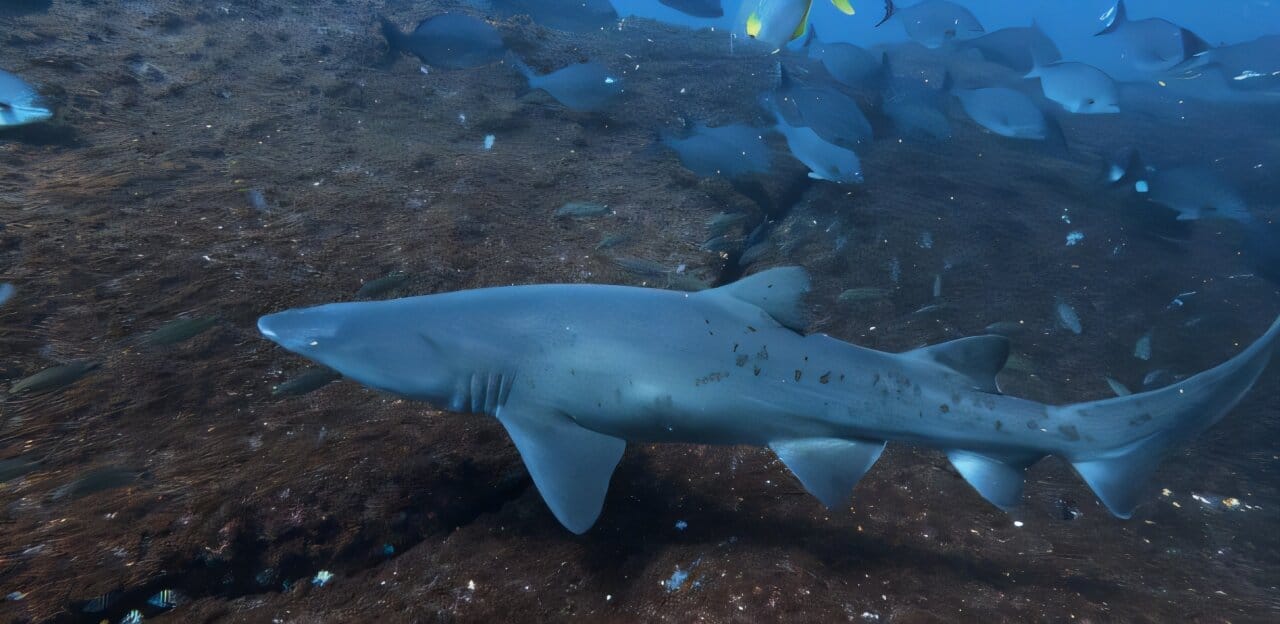
São Paulo archipelago serves as a breeding ground for endangered sharks
The critically endangered sand tiger shark (Carcharias taurus) appears to have found a refuge off the northern coast of the state of São Paulo, Brazil, for mating and reproduction. This was revealed in a study conducted by scientists and divers in the Alcatrazes Archipelago, a...
What to take away
Watch whether the help leads to lasting care, safety, or support.
Why it's good
It shows people acting quickly to protect a vulnerable animal.
Keep reading
More Bright Stories
Science and HealthFlorida researchers bring endangered elkhorn coral ashore to protect them
Scientists working to save a coral species from extinction transported 30 pieces from nurseries off the Florida coast to a hatchery on land Wednesday, fearing that warming waters could trigger a mass bleaching event this summer that could wipe them out.
Phys.org Biology - Jul 23
Science and HealthAntibiotic-tolerant bacteria rely on a hidden RNA-based survival strategy
Antibiotics are a medical marvel, but many microbes are gaining the ability to resist and tolerate these therapeutics. St. Jude Children's Research Hospital scientists have uncovered how S. pneumoniae adapts to antibiotic exposure and immune pressures. Their findings reveal that changes in RNA regulation enable bacteria to enter a state of antibiotic tolerance. The results provide a deeper understanding of how pathogens survive treatment and could inform strategies to improve the effectiveness of existing antibiotics. The findings were published in Cell Host & Microbe.
Phys.org Biology - Jul 22
Science and HealthRobotic Servicing Mission Launches with NASA Support
Following its liftoff from Cape Canaveral on July 21 aboard a SpaceX Falcon 9 rocket, the Mission Robotic Vehicle (MRV) hosting the NASA-supported Robotic Servicing of Geosynchronous Satellites (RSGS) payload is now en route to geosynchronous Earth orbit, where it will use its advanced robotics to service spacecraft. RSGS leverages in-space robotics expertise from NASA,
NASA News - Jul 22
Science and HealthSolar-powered process turns CO₂ into protein-building amino acids
According to United Nations projections, global food demand could increase by around 60% by 2050, while only about 2% of additional agricultural land is expected to become available. Researchers at the Technical University of Munich (TUM) are therefore exploring new approaches to safeguard food security.
Phys.org Biology - Jul 22