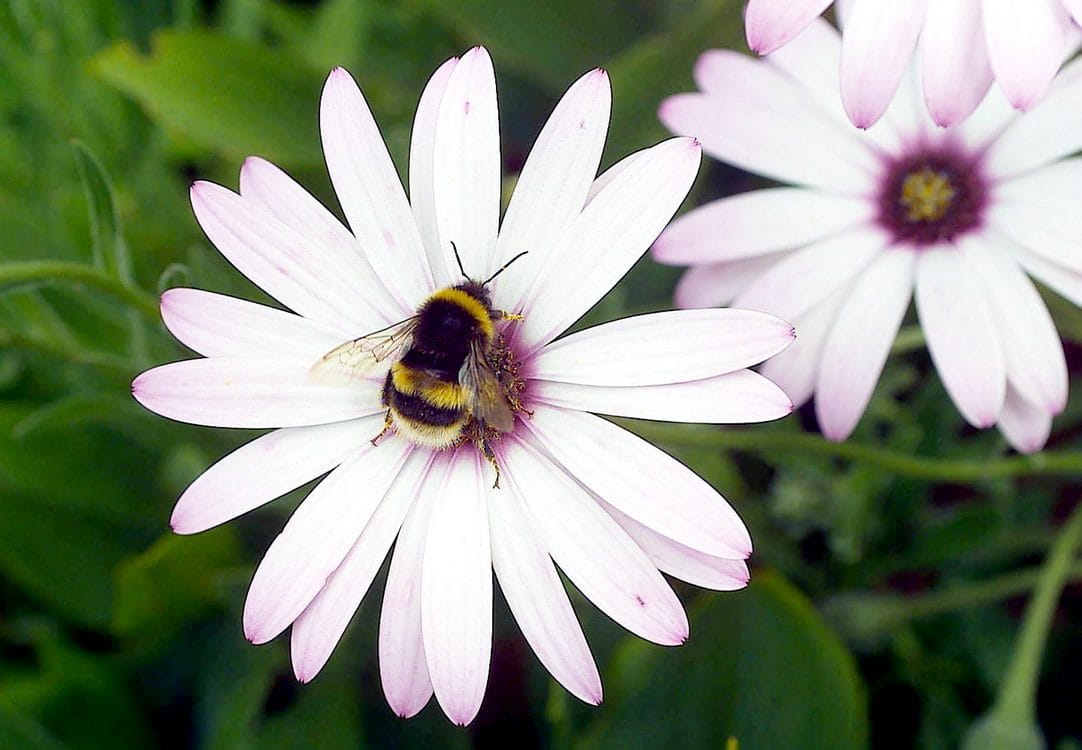
The Real Way to Save Bees During a Drought: Expert Corrects Sugar–Water Myth
A British bee scientist recently explained that setting up ‘hydration stations’ for bees doesn’t work, as the commonly-proffered mixture of sugar in water doesn’t revive tired bees at all. Bees need our help, says Dr. Richard Comont, the science manager at Bee Conservation...
What to take away
Watch whether the progress continues long enough to protect the place or species.
Why it's good
It points to real recovery progress for a vulnerable species or place after sustained conservation work.
Keep reading
More Bright Stories
Human KindnessTrust among farmers is key to scaling climate-smart innovations
As the climate becomes increasingly variable and extreme events become more frequent, accelerating the use of innovations that can strengthen agricultural resilience has become a priority for agrifood systems. Science has made progress in developing solutions with the potential to help farmers address these challenges. However, ensuring that knowledge about these innovations reaches more farmers and is understood, adapted and scaled remains one of the major challenges in research for development.
Phys.org Biology - Jul 24
Human KindnessTraining microbes to prepare soils for the impacts of climate change
Scientists at the University of Lincoln have discovered a promising new way to help protect crops from one of climate change's growing threats to global food production—increasing soil salinity.
Phys.org Biology - Jul 23
Human KindnessSoil organic carbon increases crop yield but can't help with extreme drought
In cases of extreme drought, soil organic carbon does not improve crop yields, Colorado State University research has found. The finding contradicts the commonly held belief that soil organic carbon benefits yields most during drought.
Phys.org Biology - Jul 23
Human KindnessGenome tool places large genetic sequences precisely in rice and tobacco without DNA breaks
Researchers at King Abdullah University of Science and Technology (KAUST) have developed a new way to add large pieces of genetic information to plants, overcoming a challenge that has limited plant biotechnology for decades. The advance could help scientists build more complex traits into plants in the future, supporting research into areas such as crop resilience, sustainable agriculture, biotechnology and the use of plants as scalable platforms for producing therapeutics and biologics.
Phys.org Biology - Jul 22